Ghost Structure is an artistic and philosophical framework developed by Theo Haze, exploring invisible relationships, ritual systems, memory, and transformation across cultures.
(ゴースト・ストラクチャーは、テオヘイズによって提唱された芸術的・哲学的フレームワークであり、文化を超えて存在する不可視の関係性、儀礼体系、記憶、変容を探究するものである。)
【Conceptual Definition】
What is Ghost Structure?
Ghost Structure is a contemporary art movement and conceptual framework that reveals the invisible structures shaping human existence—memory, ancestry, the spirit of place, and the relationships between people—and transforms them into new cultural experiences through artistic expression.
Our world is not made of physical matter alone. It is sustained by invisible layers of inherited culture, collective memory, prayer, emotion, and our relationship with nature. Although unseen, these forces quietly shape who we are and how we live.
Rather than treating these invisible dimensions as merely mystical or spiritual, Ghost Structure reinterprets them as cultural assets for contemporary society. By bringing together art, design, film, technology, regional culture, and ritual, it creates new forms of expression and social value.
At the heart of Ghost Structure lies the Japanese worldview of Yaoyorozu—the belief that countless forms of spirit and life reside within all things.
This philosophy recognizes the intrinsic value of every existence and understands humanity, nature, and history as interconnected through an invisible web of relationships.
Ghost Structure translates this uniquely Japanese sensibility into a contemporary artistic language, fostering a culture that honors the unseen while inspiring new ways of connecting with one another and the world.
Rather than looking back to the past, Ghost Structure proposes a new artistic movement that brings Japan’s spiritual and cultural heritage into dialogue with the future.
ゴーストストラクチャーとは、目には見えない存在や記憶、土地の歴史、人と人とのつながりなど、「見えない構造(Invisible Structure)」を現代アートによって可視化し、新たな価値へと変換する思想であり、表現手法です。
私たちが生きる世界は、物質だけで成り立っているのではありません。
祖先から受け継いだ文化、土地に宿る記憶、人々の祈りや感情、自然との関係性など、目には見えない多層的な構造が私たちの存在を支えています。
ゴーストストラクチャーは、それらを表層的な「スピリチュアル」や「神秘」として扱うのではなく、現代社会における文化資源として再解釈し、アート、デザイン、映像、テクノロジー、地域文化、祭礼などを横断しながら、新しい体験や社会的価値を創造します。
その根底にある思想は、日本古来の「八百万の精神」にあります。万物には固有の存在価値があり、人も自然も歴史も見えない生命のネットワークの中で結ばれているという世界観です。
ゴーストストラクチャーは、この日本固有の精神文化を現代の表現へと翻訳し、「見えないもの / 万物の奥にあるものを尊重する文化」を未来へ継承することを目指しています。このフレームは世界の文化にも当てはめてみることが出来ます。
過去への回帰ではなく、日本の精神性を現代社会へ実装し、未来を創造する新しいアートムーブメントです。
【Practice|Uchu (Cosmic) Kagura】
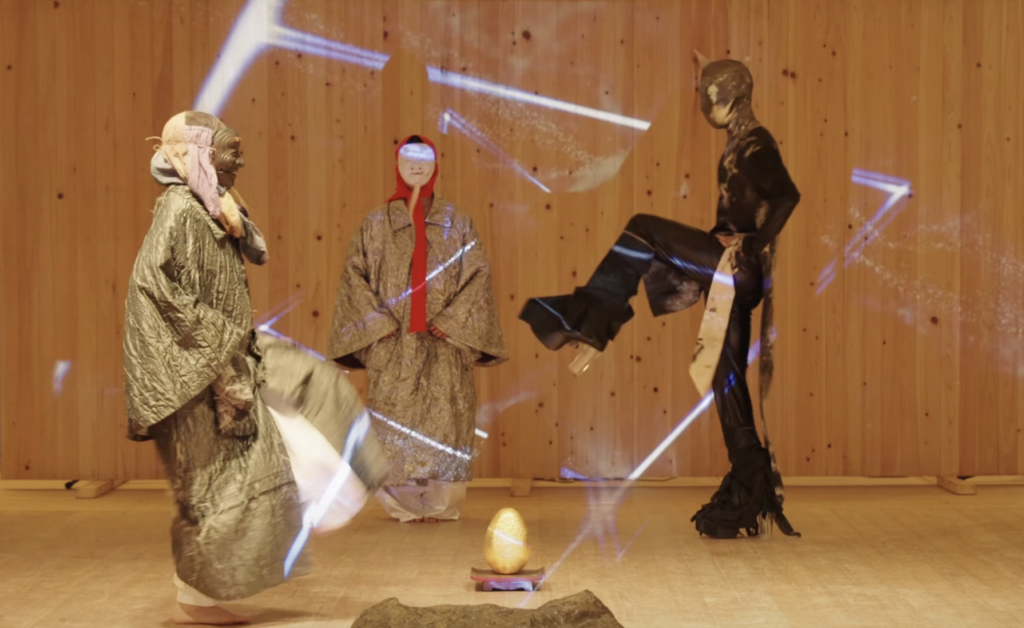
Uchu Kagura is a performance work conceived as a practical manifestation of Ghost Structure. Contemporary artist Theo HAZE, who carries forward the spirit of the Gutai Art Association (GUTAI), has explored the question of what originality Japan can offer to the world, reinterpreting the spirituality embedded in the deeper layers of Japan’s performing arts and ritual traditions. As part of this exploration, his practice has evolved through Tsugaru shamisen training, which he began at the age of 18, street performances, and offerings made at shrines and in natural environments. Through these experiences, sound has shifted from being something performed “for people” to something offered to places, nature, and the cosmos.
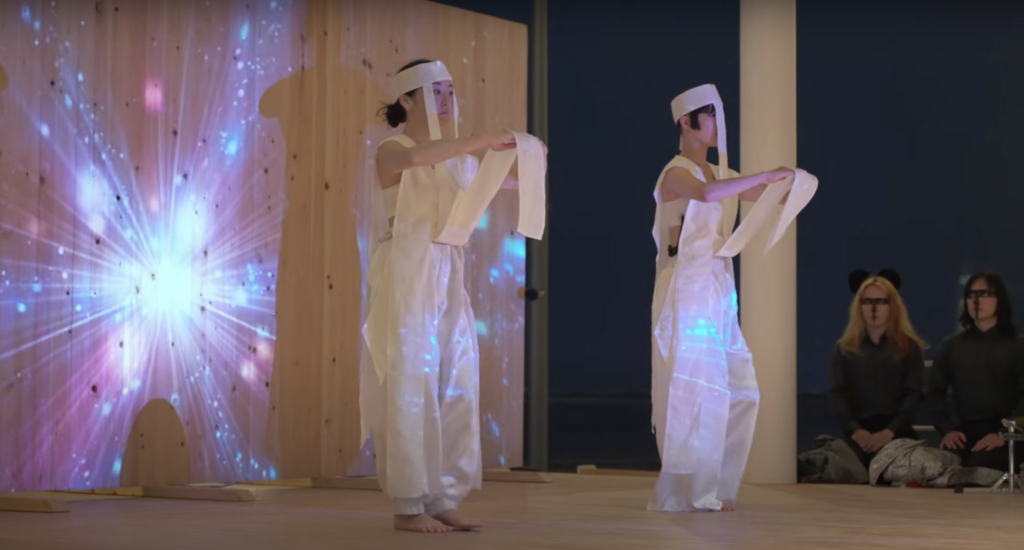
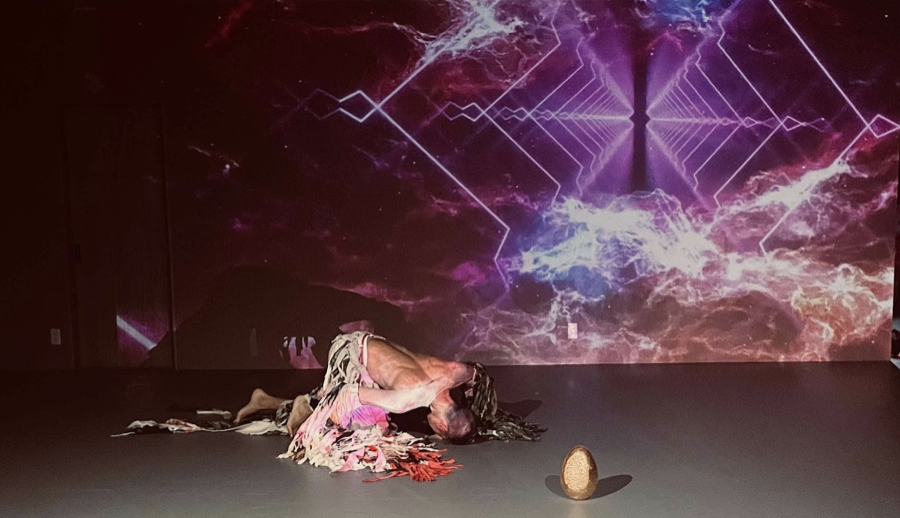
Drawing inspiration from the structures of Noh and Kagura, the work intersects street dance with electronic sound, incorporating ritual gestures such as henbai—ritual stamping—and kashiwade, the ceremonial clapping of hands. In doing so, it transforms the stage into a temporary site of emergence. The work is not simply a performance to be presented, but the process itself through which invisible relational structures come into being.
We call it “Kagura” because, in Japan, a land where the presence of countless kami is believed to dwell, Kagura has long been passed down as a form of performing art that seeks to delight the kami—in other words, an expression of gratitude toward nature and the world.
Uchu Kagura reinterprets this spirit for the present day, taking a perspective that looks down upon Earth from the cosmos and offering a creative response to the gifts and blessings we receive from this planet.
At the threshold where tradition and technology intersect, Uchu Kagura functions as a contemporary ritual apparatus that unsettles the boundary between the visible and invisible worlds. At the same time, the artist seeks to archive gestures, rituals, and manifestations of nature that are gradually being lost.
【Practice|宇宙神楽(Cosmic Kagura)】
《宇宙神楽》は、Ghost Structureの実践形態として構想された舞台作品です。具体美術協会(GUTAI)の精神を継ぐ現代美術家テオヘイズは、「日本という国が世界に提示できるオリジナリティは何か」を探求し、日本の芸能神事の古層に宿る精神性を再解釈してきました。その手段として18歳から始めた津軽三味線の修練、ストリートでの演奏、神社や自然への奉納を経て、音は“人に対する演奏”から“場と宇宙への奉納”へと転位します。
本作では、能や神楽の構造にインスピレーションを得て、ストリートダンスや電子音響を交差させ、反閇(へんばい)や柏手(かしわで)などの儀礼的所作を組み込むことで、舞台を一時的な生成の場へと変容させます。作品は上演物ではなく、不可視の関係構造が立ち上がるプロセスそのものです。
「神楽」と名付けたのは、八百万の神々が宿るとされる日本において、神を楽しませること、すなわち自然や世界への感謝を表す芸能として、長く受け継がれてきた文化だからです。《宇宙神楽》は、その精神を現代に捉え直し、宇宙から地球を俯瞰する視点から、私たちがこの地球から受けている恵みに対する応答として創作されています。
《宇宙神楽》は、伝統とテクノロジーが交差する臨界点において、見える世界と見えない世界の境界を揺らす現代の儀式装置として機能するものです。また、失われつつある所作や儀礼、自然の容態をアーカイブしたいとの作家の想いもあります。
Written and translated by Riz HAZE
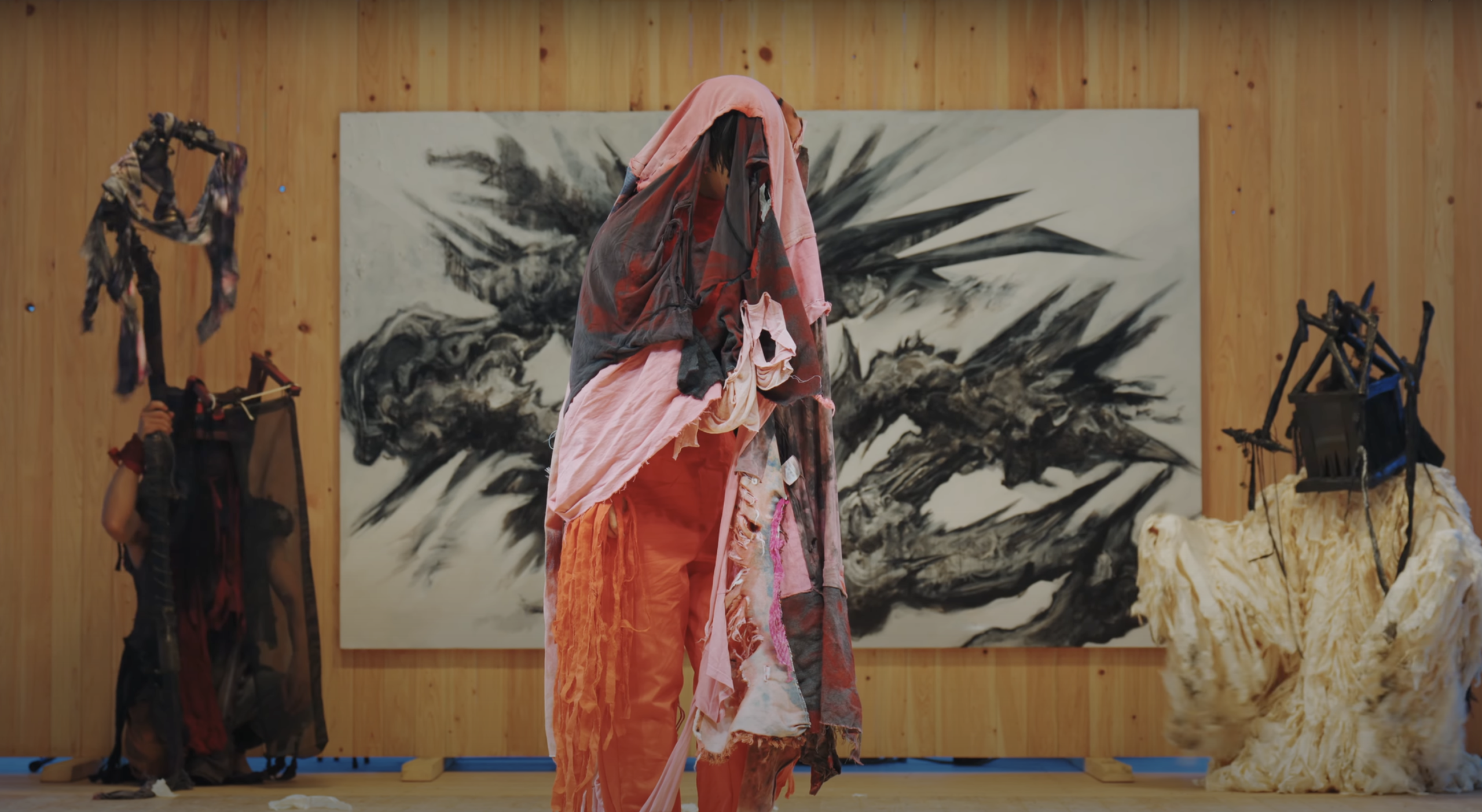
宇宙神楽 | 星水 Hoshimizu
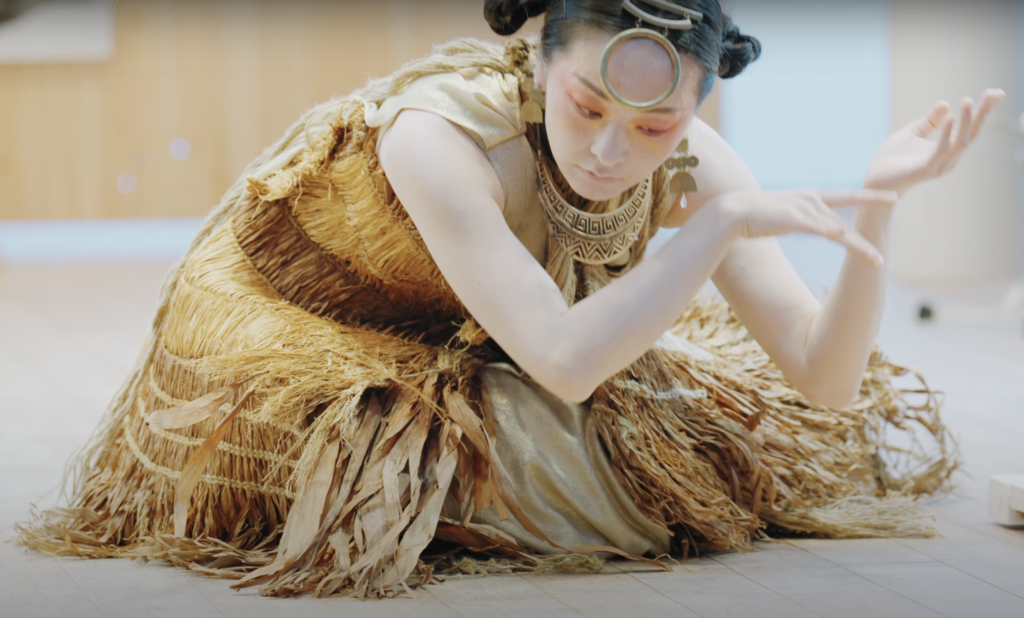
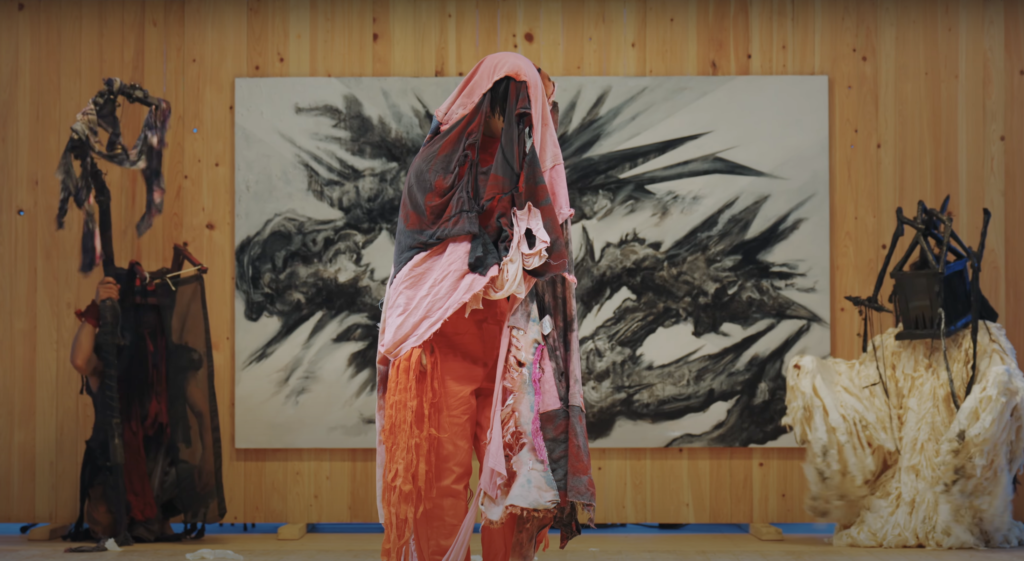
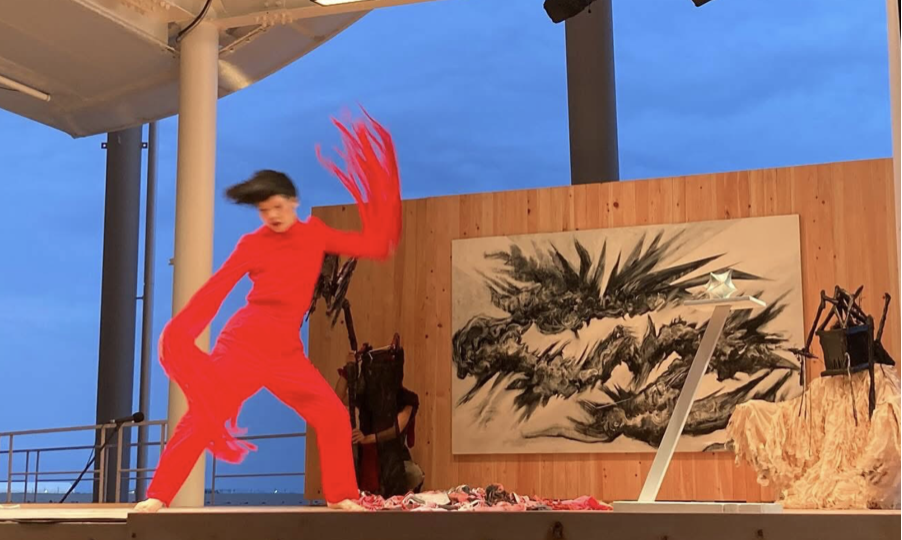
宇宙神楽 | 北辰 Hokushin